

Quality of Treatment and Patient Safety at DaVita
At DaVita, we are committed to delivering high-quality care and ensuring patient safety. We care for our patients using a proprietary quality system developed on the basis of current medical knowledge and treatment advances derived from clinical experience gained across our global network. We continuously monitor dozens of clinical parameters related to each patient’s health, record patient safety incidents, conduct internal reviews of clinical practices and processes, and update our policies as needed. The aim of this approach is to help patients feel better in their everyday lives, reduce hospitalisations and, most importantly, enable them to enjoy life for as long as possible.
Treatment Outcomes
We present our clinical outcomes through a dedicated Quality Index that incorporates assessments of clinical processes, patient safety and, of course, medical outcomes themselves. All these measures are combined into a dedicated Quality Index. It enables all members of our community, including those in non-clinical roles, to easily understand treatment progress. It also serves as a basis for comparing treatment outcomes across the countries in which DaVita operates. Each month, we also share aggregated treatment outcomes with patients at every dialysis centre, enabling them to track treatment progress at their local facility.
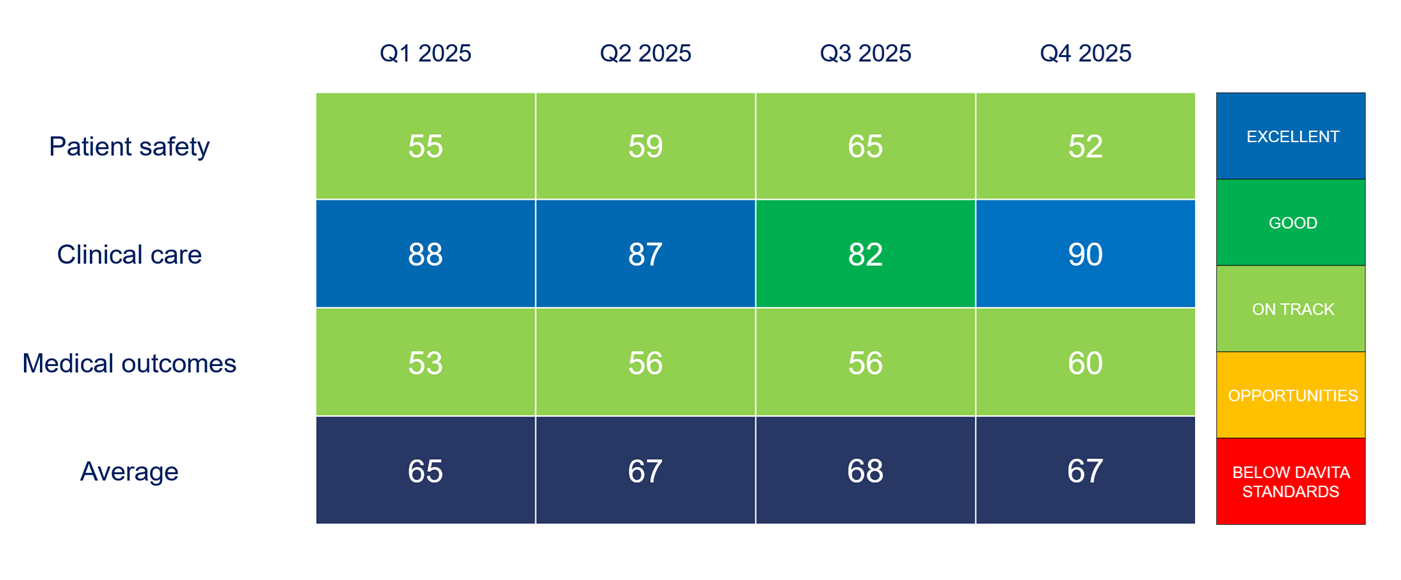
Commentary: The change in patient safety results at the end of 2025 reflected the transition to a new system and the learning curve associated with the adoption of the new tool.
A fourth component related to patient satisfaction will also be added to the Index once all DaVita countries have incorporated this measure into their routine practice.
DaVita Poland has already taken this step.
Advancing Treatment
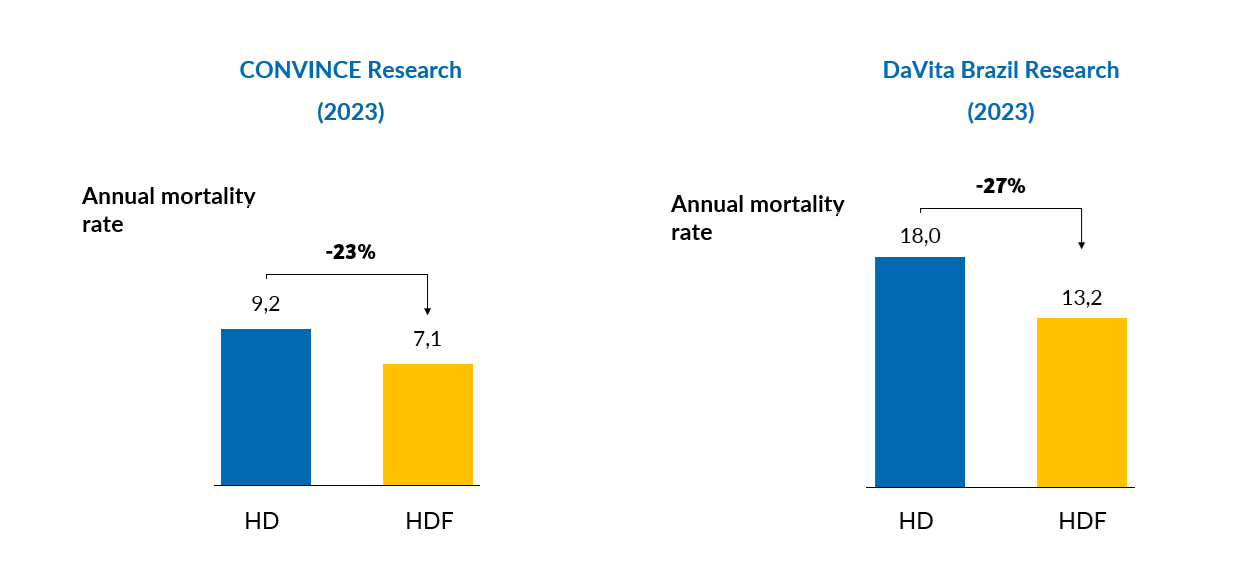
From 2026, DaVita will introduce haemodiafiltration as the preferred treatment option for haemodialysis patients with end-stage kidney disease. Haemodiafiltration (HDF) combines two biophysical mechanisms—diffusion and convection—whereas conventional haemodialysis relies primarily on diffusion. As a result, haemodiafiltration is more effective at removing toxins and excess fluid from the body, functions that the patient's damaged kidneys can no longer perform adequately. Patients tolerate dialysis sessions much better and experience less fatigue following treatment. HDF also enables more effective control of anaemia and chronic inflammation and, most importantly, improves patient survival.
Supporting System-Level Change
For many years, DaVita has advocated for changes needed in Poland’s system of care for people with CKD. This disease affects approximately 5 million people in Poland, yet as many as 95% of them are unaware that their kidney function is progressively declining. The World Health Organization estimates that by 2040, CKD will become the fifth leading cause of death worldwide. Nephrology requires the same urgent and focused attention from policymakers as oncology and cardiology.
According to healthcare professionals, primary care is virtually the only stage of the treatment pathway that does not require significant improvement. Unfortunately, the same cannot be said for the rest of the patient care pathway.
Join Us
If you would like to help us improve the care system for patients with CKD in Poland, or join the DaVita team, we would be delighted to hear from you.